
Hardware
Why RAM Prices Are Surging and What It Means for Your Next Hardware Purchase
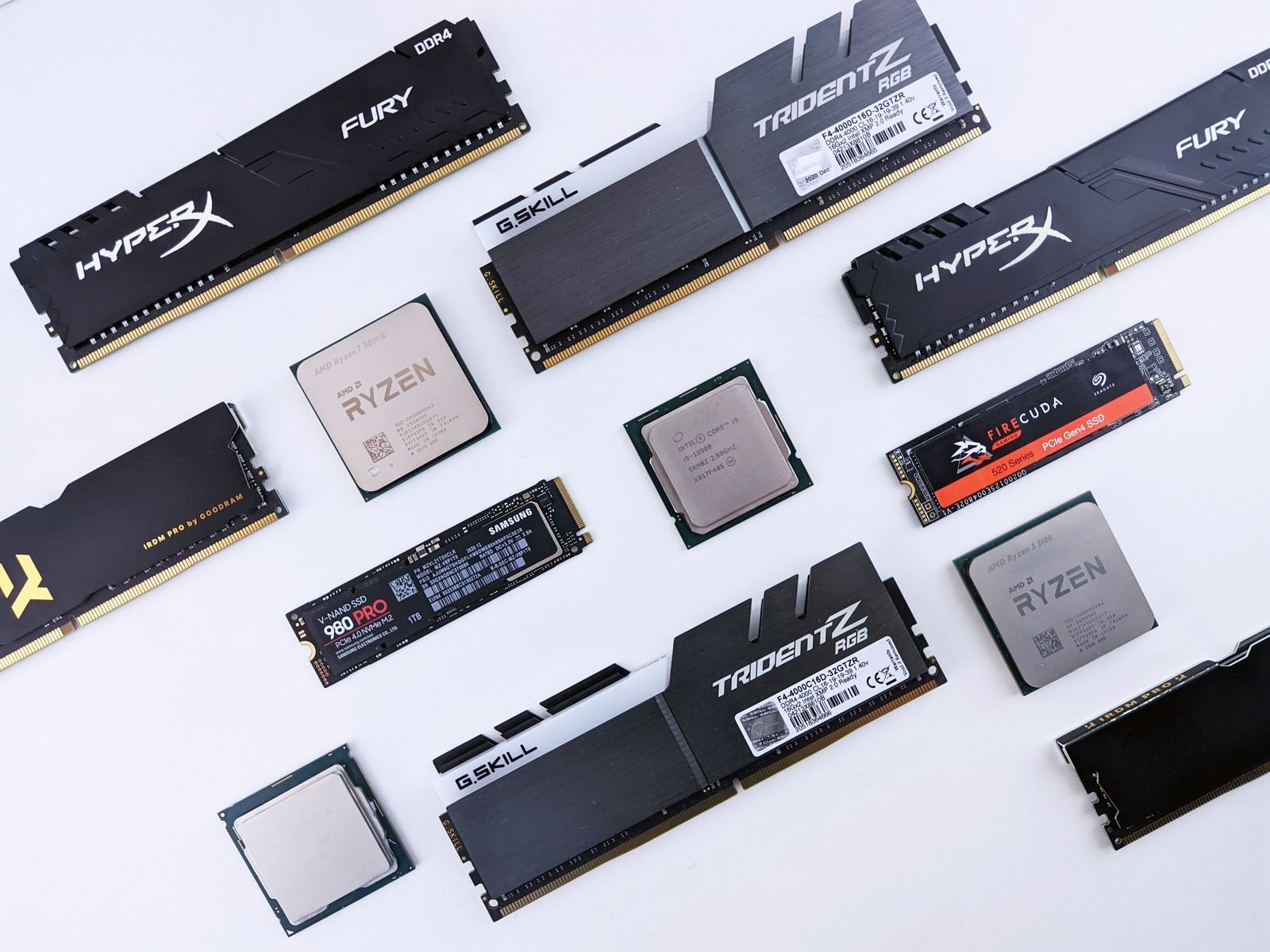
The Most Expensive RAM You Never Bought
Picture this. You put together a PC build on your favourite parts list site sometime in mid-2025. A solid 32GB DDR5-6000 kit sat comfortably at around $95. You bookmarked it, waited for a sale that never came, and came back six months later to find the same kit sitting at over $400. You refreshed the page twice to make sure it was not a mistake.
It was not a mistake. Welcome to RAMageddon.
That is the term circulating in tech media for the memory crisis now reshaping the cost of every piece of consumer electronics with a chip inside it. The cause is not a factory fire, a pandemic, or a shipping bottleneck. It is something more structural and more interesting: the artificial intelligence industry has quietly consumed the world's memory chip supply, and the rest of us are left competing for what remains.
How AI Ate Your RAM
To understand the shortage, you need to understand one specific product: High Bandwidth Memory, or HBM.
HBM is the ultra-fast memory stacked directly on top of AI chips like NVIDIA's H100 and B200. It is what allows those chips to process the vast amounts of data that large language models require in real time. Without HBM, the AI data centre boom does not function. And the three companies that make nearly all of the world's DRAM, Samsung, SK Hynix, and Micron, have made a very logical business decision: HBM earns them three to five times more revenue per wafer than standard consumer memory. A single HBM3E module sells for $60 to $100. A comparable amount of conventional DDR5 sells for a fraction of that.
The result is a production shift of historic scale. Roughly a fifth to a quarter of global DRAM wafer production has been redirected toward HBM. Critically, producing one gigabyte of HBM consumes roughly three times the wafer capacity of producing one gigabyte of conventional DDR5. So as AI demand grows, the manufacturing capacity available for your next PC's memory kit shrinks faster than the raw numbers suggest.
SK Hynix declared during its October 2025 earnings call that its HBM capacity is essentially sold out through 2026. Samsung followed with similar guidance. The DRAM industry is not struggling to keep up. It has simply decided that AI data centres are a better customer than you are.
The market has recorded the consequences. DRAM contract prices rose 171% year on year. DDR5 desktop kits that cost $80 to $120 in mid-2025 are now priced at $300 to $500. Gartner estimates a further 130% surge in combined DRAM and SSD prices by the end of 2026. Most analysts see no serious price correction before 2028, with some projecting the structural shortage will persist until 2030.
What This Means for Your Next Build or Console Purchase
If you are planning a PC build in 2026, the RAM line item alone may shock you. Reporting on HP's Q1 2026 earnings call indicated memory roughly doubled as a share of build costs in a single quarter. That cost increase flows through to shelf prices on pre-built desktops and laptops. The days of treating RAM as one of the cheaper components in a build are over for the foreseeable future.
Console buyers are feeling the same pressure, complicated further by US tariff policy on electronics manufactured in Asia. Sony raised PS5 prices in April 2026: the standard PS5 now sits at $650, up $100 from its previous price, and the PS5 Pro has reached $900, a $150 increase. The standard PS5 now costs $150 more than its original 2020 launch price. The Xbox Series X is at $649.99, up $150 since launch, with the 2TB variant at $800.
Tariffs contributed to these hikes, but the deeper driver is the memory supply chain. Sony reportedly moved early to stockpile GDDR6 memory, giving it some buffer. Microsoft, according to sources cited by the hardware analysis channel Moore's Law Is Dead, planned less carefully and faces greater ongoing exposure to spot market pricing. Next-generation console timelines are also slipping: Sony is reportedly considering pushing the PlayStation 6 launch to 2028 or 2029 partly because of uncertainty around memory component availability and cost.
What You Should Actually Do About It
The worst move right now is to wait and hope prices drop before you complete a build or replacement purchase. The supply fundamentals driving this shortage are not going away quickly. Waiting six months is likely to cost you more, not less.
If you are planning a PC build, buy your memory now and size it generously. Upgrading later will cost more. If you are advising a business on hardware procurement, factor the current memory environment into your budgets and your refresh cycles. Equipment that was priced and specced twelve months ago may cost significantly more to replace today on a like-for-like basis.
For console purchases, the price you see today is probably not the ceiling. Sony and Microsoft have both demonstrated willingness to raise prices when supply economics force the issue, and further increases cannot be ruled out before the end of 2026.
The AI infrastructure buildout is not slowing down, and neither is the memory supply chain pressure it has created. The shortage is structural, the timeline to relief is measured in years, and the prices you see today are unlikely to represent the ceiling. The most rational response is to treat that as a fact of the current hardware landscape and plan accordingly, rather than wait for a correction that the fundamentals do not yet support.
Share this article