
Connectivity
MTN Zambia Just Made History. Here Is What Starlink Direct-to-Cell Means for Every Zambian With a Phone
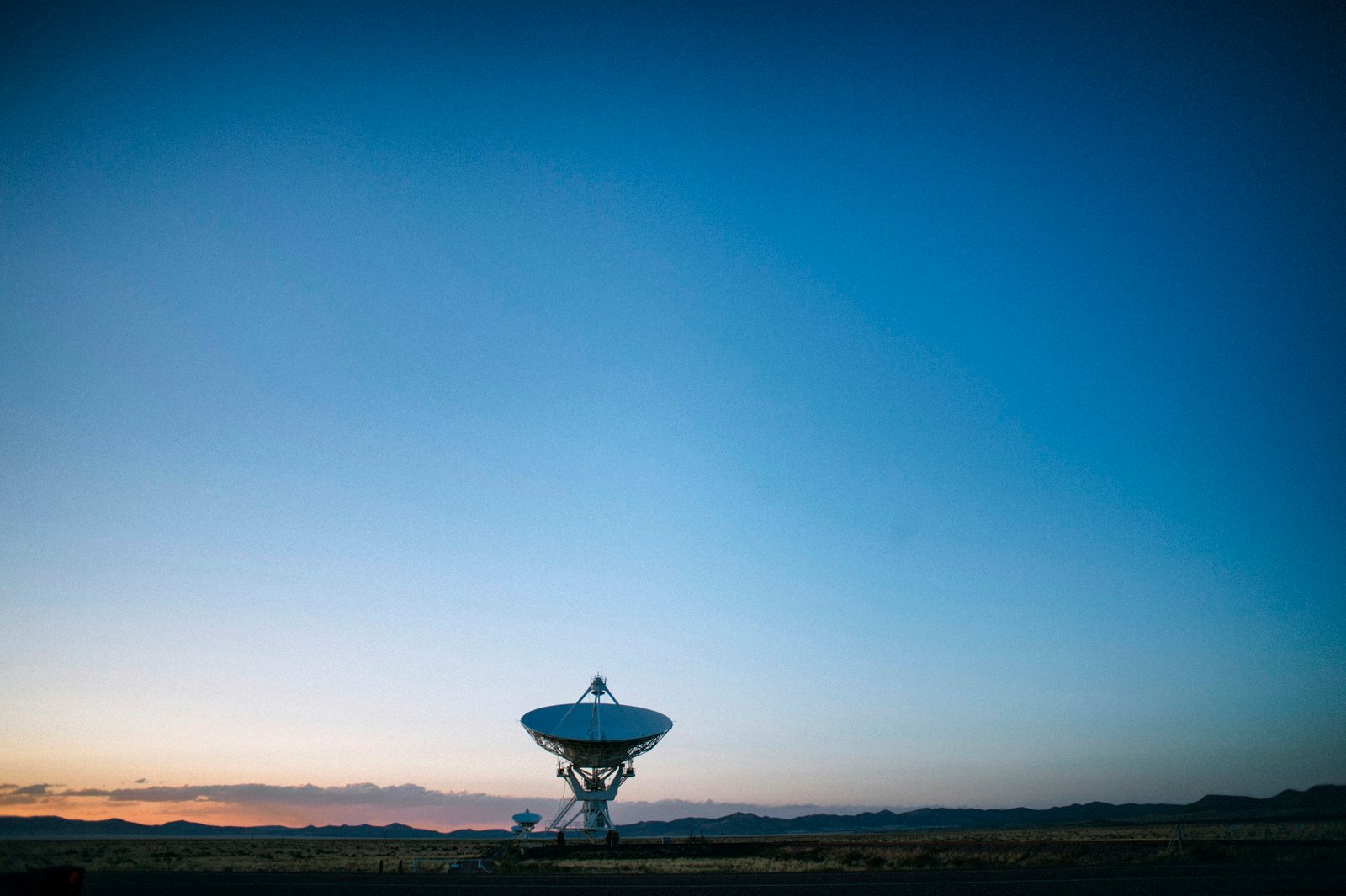
A farmer in Chibombo District, forty kilometres from the nearest cell tower, drives twenty minutes to a trading post just to get enough signal to send money to his daughter in Lusaka. No emergency. No drama. Just the invisible tax that geography levies on millions of Zambians every day: lost time, delayed transactions, missed opportunities, because a satellite was not positioned to serve that particular patch of land.
In early March 2026, MTN Zambia changed that conversation permanently. The operator completed Africa's first Starlink Direct-to-Cell test, demonstrating live data connectivity and a mobile money transaction, routed through SpaceX's Low Earth Orbit satellite network, on standard, unmodified smartphones. No special handsets. No satellite dishes. Just the phone already in your pocket.
This is not a press release achievement. This is an inflection point.
What Starlink Direct-to-Cell Actually Is
To understand why this matters, you need to understand what makes Direct-to-Cell fundamentally different from every satellite internet solution that came before it.
Traditional satellite connectivity, including the standard Starlink home and business dish, requires dedicated hardware: a receiver, a router, a clear line of sight to the sky. That model works well for offices, lodges, and fixed locations with the budget and infrastructure to support it. It does not work for a minibus driver in Western Province or a nurse walking between clinics in Luapula.
Starlink Direct-to-Cell is built on a different premise. SpaceX has equipped a subset of its second-generation satellites with cellular radio payloads that communicate directly with standard LTE-enabled smartphones using existing mobile frequency bands. The satellite behaves like a cell tower orbiting at roughly 570 kilometres above the Earth's surface, covering an enormous geographic footprint with each pass.
The phone sees it as a network. The user sees bars. No new device required.
The technology works in partnership with terrestrial mobile operators, not in competition with them. MTN Zambia provides the licensed spectrum and the billing infrastructure. SpaceX provides the orbital layer. Together, they extend MTN's network to every square kilometre of Zambia that has a clear view of the sky, which is, practically speaking, the entire country.
What MTN Zambia Actually Demonstrated
The March 2026 test was not a controlled laboratory exercise. The trial established two concrete proofs: a live data session over the satellite link, and a completed MTN Mobile Money transaction from a device with no terrestrial coverage.
Together, these two results confirm that the link can carry the kind of activity Zambian customers actually depend on. A successful data session means WhatsApp voice calls, app functionality, and account management are within reach on this technology, because the underlying link quality is there. A completed MoMo transaction means the service can handle authenticated, real-time fintech activity, not just passive data. For millions of Zambian households where mobile money is the banking system, that proof is the one that matters most.
Commercial launch remains subject to regulatory approval from the Zambia Information and Communications Technology Authority (ZICTA). That process is underway, and the timeline will depend on how quickly ZICTA works through the spectrum licensing and service classification questions that any novel technology of this type raises. The precedent, however, has been set. Africa's first Direct-to-Cell test happened on Zambian soil.
Zambia's Connectivity Reality and Why This Changes It
Zambia is a large country. At 752,000 square kilometres, it is bigger than France alone. Its population of over 20 million people is spread across that territory in patterns that make traditional tower-based coverage economically brutal to extend.
ZICTA's own coverage data has consistently shown that reliable cellular connectivity clusters around the line-of-rail corridor: Livingstone, Lusaka, Kabwe, Ndola, Kitwe. Move east toward Petauke, north toward Mporokoso, west toward Kaoma, or south toward Gwembe, and the picture changes dramatically. Large portions of the country have no coverage at all, and significant portions have coverage that is technically present but practically unreliable.
This gap has real consequences for Zambian businesses. A construction company operating a remote site cannot reliably communicate with its Lusaka office. An agricultural processor cannot get real-time prices from farmers in distant districts. A logistics firm loses visibility of its vehicles the moment they leave the main roads. Emergency services in rural hospitals operate in near-isolation.
Direct-to-Cell does not eliminate the need for terrestrial infrastructure. Towers will always deliver superior throughput and lower latency for dense urban areas. What Direct-to-Cell provides is a connectivity floor: a baseline level of service that means no Zambian with an MTN SIM is ever completely unreachable simply because of geography.
That floor transforms the economics of rural business. It makes remote site management feasible. It turns mobile money into a genuinely national financial tool rather than an urban-plus-corridor service. It changes what is possible for agricultural extension, public health logistics, and emergency response coordination.
What This Means for Zambian Businesses Right Now
The practical business implications fall into three categories, and they apply whether your company is based in Lusaka or in Solwezi.
Connectivity resilience becomes a real planning option for the first time. Businesses that currently rely on a single terrestrial network can model a future where satellite coverage provides automatic failover when that network drops. Load shedding already tests Zambian business continuity daily. Adding a layer of network redundancy that is physically independent of ground infrastructure is a meaningful risk reduction.
Geographic reach for field operations changes its calculus. Companies that have avoided remote site operations, agricultural outreach programs, or rural service delivery partly because of communication constraints now have a different cost-benefit equation to run. If your field team can reliably reach head office from anywhere in the country using their existing phones, the operational model for a whole category of businesses shifts.
Emergency communication gets a significant upgrade. Every business, institution, and individual benefits from knowing that a genuine emergency, whether a medical situation, a security incident, or an infrastructure failure, can be communicated regardless of location. That is not a commercial benefit in the traditional sense. It is the kind of capability that defines what a connected society looks like.
None of this requires waiting for commercial launch. The time to think through how your business would use universal connectivity is now, before the service is live, so that you are positioned to act the moment ZICTA grants approval.
A Glimpse of Where This Leads
Direct-to-Cell is version one of a technology that will improve. Throughput will increase as SpaceX deploys more second-generation satellites and refines the antenna technology. Latency will decrease as orbital geometry optimises. Additional operators across Africa will follow with their own tests and launches, creating competitive pressure that will keep pricing honest.
Zambia's position as the site of Africa's first completed test is not incidental. MTN Zambia and ZICTA have signalled that Zambia intends to be a participant in shaping how this technology arrives on the continent, not simply a recipient of whatever terms are negotiated elsewhere. For a country whose digital economy ambitions have always run up against the geography of coverage gaps, that is a posture worth building on.
For businesses thinking seriously about what this shift means in practice, the questions tend to be the same: how do we build infrastructure that holds up when terrestrial networks fail, how do we reach customers and field teams beyond the line of rail, and how do we make sure our digital presence is ready for the next wave of people coming online. At Windhelm Digital, those are exactly the conversations we have with our clients every day. Explore our services or get in touch to talk through what Zambia's connectivity future means for your business specifically.
Share this article