
Infrastructure
The Hidden Cost of America's Data Centre Boom: Who Really Pays for the Cloud
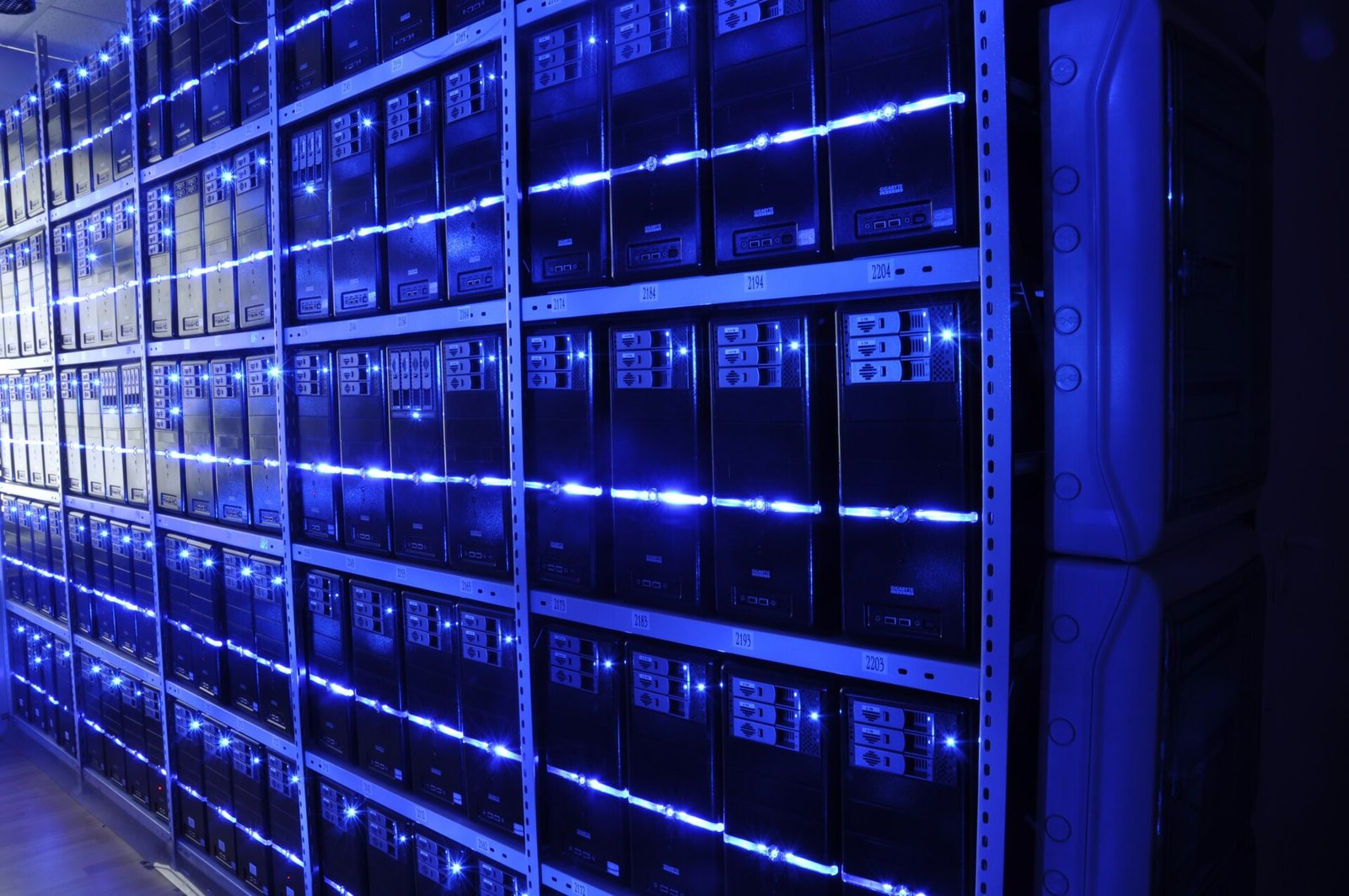
The Hum That Never Stops
In Prince William County, Virginia, a retired schoolteacher stands in her backyard at dusk and listens. Beyond the tree line, where a soybean field used to be, a windowless grey building the size of several football fields now runs day and night, and it never really goes quiet. A low mechanical drone sits under every conversation, every open window, every attempt to sit outside in the evening. A few kilometres away, in Loudoun County, a builder recently offered a homeowner cash for her house, not because he wanted to live in it, but because the data centre going up next door made the land more valuable empty than occupied.
This is the everyday texture of life in what the industry proudly calls Data Center Alley, the cluster of server farms in Northern Virginia that now handles a significant share of the world's internet traffic. It is also, increasingly, the texture of life in parts of Georgia, Texas, and Arizona, as the American data centre construction boom races to keep up with cloud computing, streaming, and a wave of artificial intelligence investment that shows no sign of slowing. What gets far less attention than the ribbon cuttings and the investment announcements is what this boom is actually doing to the electricity bills, water supplies, air quality, and daily peace of the communities hosting it.
The Grid Was Not Built for This
Data centres are, at their core, enormous consumers of electricity, and American utilities are struggling to keep pace with how fast that demand is growing. Goldman Sachs Research projects that data centres will account for 5.3% of total US peak summer power demand in 2026, drawing around 41 gigawatts nationally, a figure that has climbed sharply in just a few years. The US Department of Energy's Lawrence Berkeley National Laboratory has tracked data centre electricity use climbing from 58 terawatt hours in 2014 to 176 terawatt hours in 2023, already 4.4% of total US electricity, and projects it could reach between 325 and 580 terawatt hours by 2028, or roughly 6.7% to 12% of the country's entire electricity supply. That is not a distant, decade-away projection. It is two years out.
The clearest evidence of the strain shows up in wholesale electricity markets. PJM Interconnection, the grid operator covering thirteen states including Virginia, Maryland, and Ohio, saw its capacity prices jump from $28.92 per megawatt day in the 2024/25 delivery year to $329.17 per megawatt day for 2026/27, a roughly tenfold increase in just two auction cycles. Data centres accounted for 63% of the price increase in one recent auction, translating to $9.3 billion in additional costs that get passed on to customers across the grid. PJM itself projects that of the 32 gigawatts of peak demand growth expected between 2024 and 2030, all but 2 gigawatts will come from data centres alone. The grid, in other words, is being rebuilt around a single industrial customer, and everyone else on the network is paying part of the bill for that expansion.
Who Actually Pays for the Cloud
That bill is landing in mailboxes. Dominion Energy, Virginia's largest utility, secured base rate increases of $565.7 million for 2026 and a further $209.9 million for 2027, which works out to roughly $11.24 more a month for a typical residential customer this year. A Bloomberg analysis published in July 2025 found that wholesale electricity prices at some grid nodes near heavy data centre activity rose by as much as 267% over five years, comparing April 2025 with April 2020. That figure describes the wholesale supply cost at specific points on the grid, not the retail bill a household receives, but since that wholesale cost typically makes up roughly 30% to 50% of what households actually pay, a spike of that size still works its way into monthly bills for anyone served by the same stretch of grid. Virginia's state regulators have since approved a cost shift for 2027, cutting residential rates by 3.4% while raising rates for data centres by 15.8%, a rare acknowledgement from a state regulator that ordinary households had been quietly subsidising industrial customers.
Georgia tells a similar story. Georgia Power's plan to add 10,000 megawatts of new generating capacity by 2030, driven almost entirely by data centre demand, could push residential bills up by at least $20 a month. State lawmakers there have introduced legislation specifically aimed at stopping utilities from passing data centre generation and transmission costs onto everyone else's bill, a sign of how directly this has become a kitchen table issue rather than an abstract policy debate.
The Water Problem Nobody Budgeted For
Electricity is only half of the resource story. Data centres also need enormous volumes of water to keep their servers cool, and that demand is colliding with some of the worst drought conditions the American West and South have seen in decades. As of early 2026, more than 60% of the lower 48 states were classified as being in drought, with Arizona, Nevada, and several neighbouring states recording their lowest snowpack readings since satellite monitoring began.
In Newton County, Georgia, a single data centre that opened in 2018 now uses roughly 500,000 gallons of water a day, about 10% of the entire county's water consumption, in a state currently experiencing severe to exceptional drought and wildfires in its southern reaches. Proposed data centres across metro Atlanta are seeking anywhere from 5,000 to 9 million gallons a day depending on the cooling technology chosen, and local planners are now asking developers to voluntarily cut consumption because the region's water supply simply was not designed around this scale of industrial demand.
Arizona faces its own version of the same squeeze. The Bureau of Reclamation declared a Level 1 shortage on Lake Mead for 2026, forcing the state to cut 512,000 acre feet of water, about 18% of its annual allocation. Against that backdrop, sustainability research group Ceres projects that Phoenix's data centre water consumption alone could grow tenfold, to roughly 3.8 billion gallons a year. Some operators are responding. Amazon has begun cooling several of its Georgia facilities with recycled water, saving an estimated 33 million gallons a year in that state and planning to extend the approach to more than 120 sites nationwide by 2030. That is a genuine improvement, but it is arriving years after communities already felt the strain, and it remains the exception rather than the industry norm.
Noise, Diesel, and a Fight Over the Air Itself
The mechanical hum described at the start of this article is not a minor annoyance. It has become the subject of a fast-growing wave of litigation across the country. In 2026 alone, residents in North Tonawanda, New York filed suit over noise from a Bitcoin mining data centre, homeowners in Dowagiac, Michigan and Vineland, New Jersey brought class actions over round the clock noise from server farms, and residents in Mississippi sued xAI and SpaceX over what they described as near constant noise and vibration from a facility built in their community. Several jurisdictions have since written new noise ordinances specifically because of data centres, capping allowable sound at 65 decibels during the day and 55 at night in residential zones, a level roughly equivalent to a running dishwasher heard through a wall.
The air quality concerns run deeper still. Data centres rely on diesel backup generators to keep servers running during grid outages, and a Sierra Club investigation identified more than 10,500 such generators in Northern Virginia alone, with a combined capacity of nearly 27 gigawatts, enough to power seven million homes. Amazon's permits alone allow its Northern Virginia backup generators to emit up to 4,200 tons of nitrogen oxide a year, comparable to a mid-sized coal power plant. Researchers modelling the combined health toll of data centre air pollution nationally, counting both the power plants that supply these facilities and the backup generators that support them, have estimated roughly 1,300 additional premature deaths a year and respiratory health costs reaching $20 billion annually by 2028. Narrowed down to Virginia's diesel generators specifically, the picture is smaller but still serious: researchers estimate around 14,000 asthma symptom cases and 13 to 19 deaths a year at realistic emission levels, a toll that could climb to $2.2 to $3.0 billion in annual health costs only in a worst case scenario where generators run at their full permitted emissions during a prolonged grid outage. Virginia has responded with legislation requiring newer, cleaner Tier IV generators for any project applying after July 2026, and California has introduced its own bill targeting diesel backup at large facilities, but the existing fleet of older generators already installed remains largely untouched by either law.
Land, Tax Breaks, and Jobs That Rarely Show Up
Loudoun County, the heart of Data Center Alley, now hosts more than 250 data centre facilities, the largest concentration anywhere in the world, and computer equipment tax revenue there reached $684.8 million in the 2026 fiscal year, up 17.8% from 2023. That revenue is real, and it has genuinely funded local schools and services. But the community backlash has grown loud enough that county supervisors voted in mid-2026 to pause new data centre applications and strip away the "by right" permitting that had let developers build with minimal public input, replacing it with a conditional use process that at least gives residents a formal say. Neighbouring Suffolk, Front Royal, and Chesapeake have introduced similar pauses or outright bans in the same year, a remarkable turn for a region that spent two decades actively courting this exact industry.
The jobs promised in exchange for tax breaks have often failed to materialise at the scale advertised. In Texas, a state sales tax exemption originally projected to cost technology companies a modest $15 million every two years has instead ballooned to $3.3 billion in 2026, with state auditors finding widespread noncompliance and several data centres struggling to meet even the minimum requirement of 20 permanent jobs. In New York, a JPMorgan Chase data centre expansion received close to $77 million in tax breaks in exchange for a promise of exactly one permanent job. Eight years later the site employs 25 people, an improvement on the original figure but still a subsidy of well over $1 million per job. Virginia's own sales tax exemption for data centres now costs the state over $1 billion a year in forgone revenue, a figure lawmakers are actively debating how to rein in.
What This Actually Means
None of this means data centres are inherently bad or that the digital services running through them, from cloud storage to streaming to the AI tools increasingly built on top of them, are not genuinely useful. What it means is that the physical infrastructure underpinning modern computing has real, unevenly distributed costs, and those costs are currently being paid disproportionately by the households, water systems, and air quality of the communities nearest to it, while the tax and permitting frameworks meant to justify that trade off have too often failed to hold up their end of the bargain.
For any business or organisation weighing how and where to run its own infrastructure, whether that means choosing a cloud provider, planning a data migration, or simply deciding how much computing capacity it actually needs, these are not abstract concerns from a faraway industry. They are a reminder that infrastructure decisions carry real costs somewhere in the chain, and that understanding those trade offs before committing to a provider or a platform is worth the time it takes. If you are trying to make sense of your own cloud, hosting, or infrastructure choices and want a clear-eyed, independent view of what actually makes sense for your organisation, get in touch with us or take a look at our full range of services to see how we help businesses make smarter infrastructure decisions.
The cloud has always been a useful piece of marketing language. It suggests something weightless, distant, and clean. The reality, for the people now living beside the buildings that make it work, is a great deal more grounded than that.
Share this article